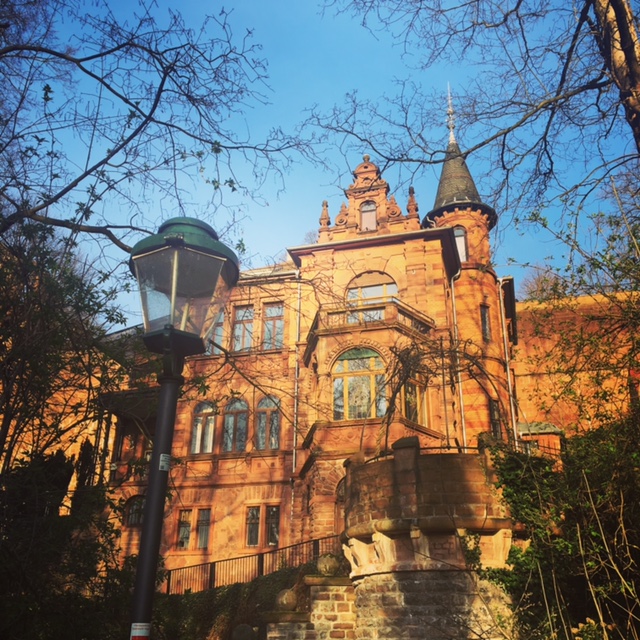
Friends came to visit from England for a weekend and I wanted to show them Germany but without travelling too far so we went to Heidelberg as part of our #ExploreEurope campaign.
Heidelberg is a university city and a tourist draw. There is a fantastic buzz about the place. It is very old worldy. Lots of nooks, crannies, cobbled streets and great bars and restaurants. Rumor has it that the reason Heidelberg didn’t get bombed in the second World War is that Churchill & Hitler made a pact not to bomb the cities of learning so Cambridge and Oxford in England were also not bombed.
Founded in 1386, Heidelberg University is Germany’s oldest and one of Europe’s most reputable universities. A scientific hub in Germany, the city of Heidelberg is home to several internationally renowned research facilities adjacent to its university. Almost 160,000 people live in Heidelberg and 25% are students!
The Old Town
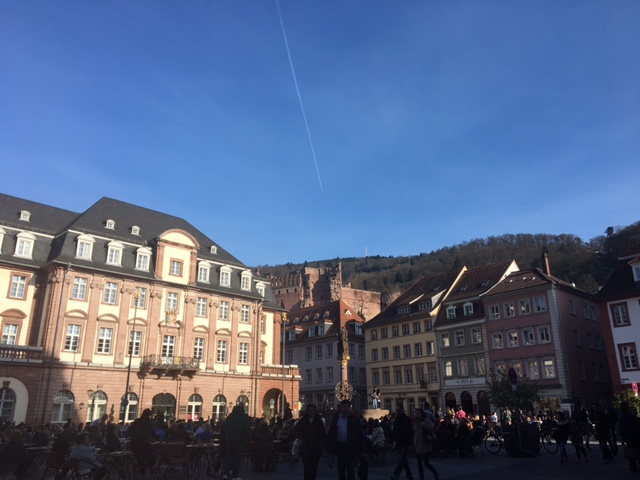
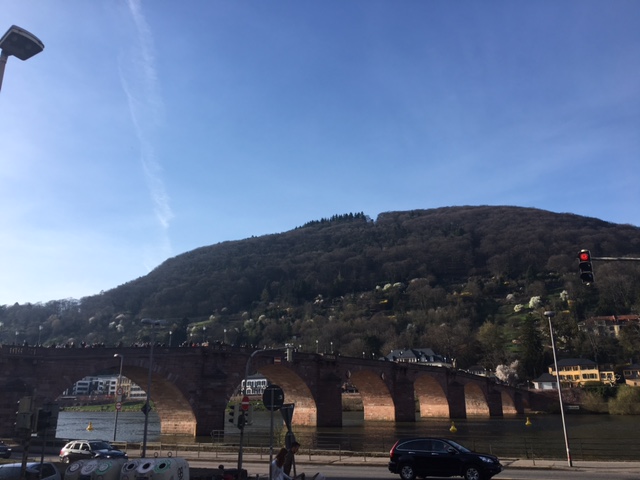
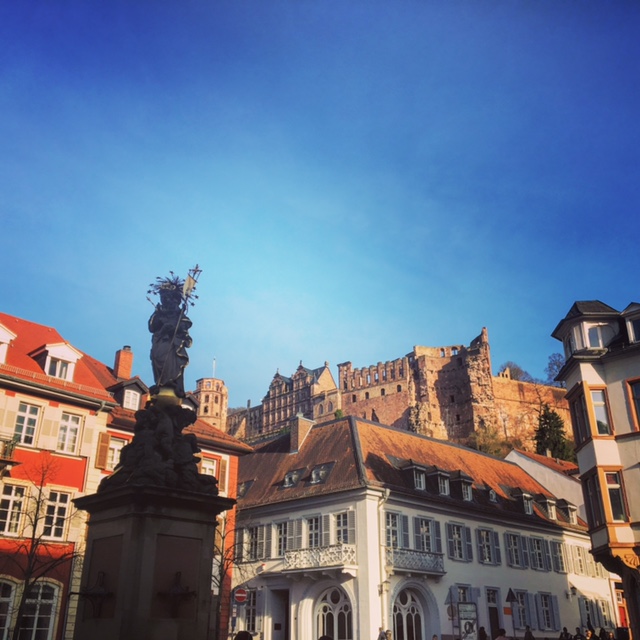
The Old Town of Heidelberg sits along the south bank of the river Neckar, and is long and narrow. It boasts one of the most picturesque pedestrian shopping streets in Europe – between Bismarck Platz and Martkplatz – which is dominated by the castle ruins. There is also a lovely selection of small independent shops at Heumarkt and along Untere Straße, which comes alive at night with really cool indie bars too!
Whilst in the Marktplatz, grab a coffee and a table and watch the world go by. There are artists, musicians and much more street entertainment all happening nearby. For chocolate lovers there is a Lindor Store here as well so grab that coffee and snack on wonderful chocolate. There is an abundance of cafes and restaurants serving local food and international cuisine.
Heidelberg Castle
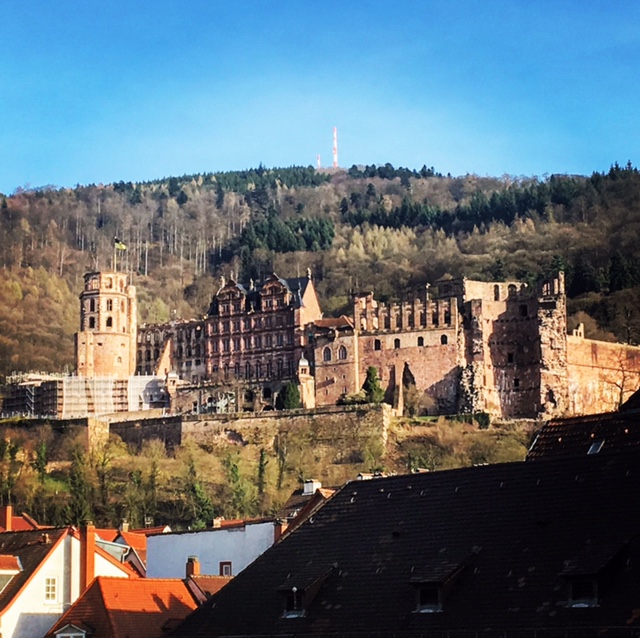
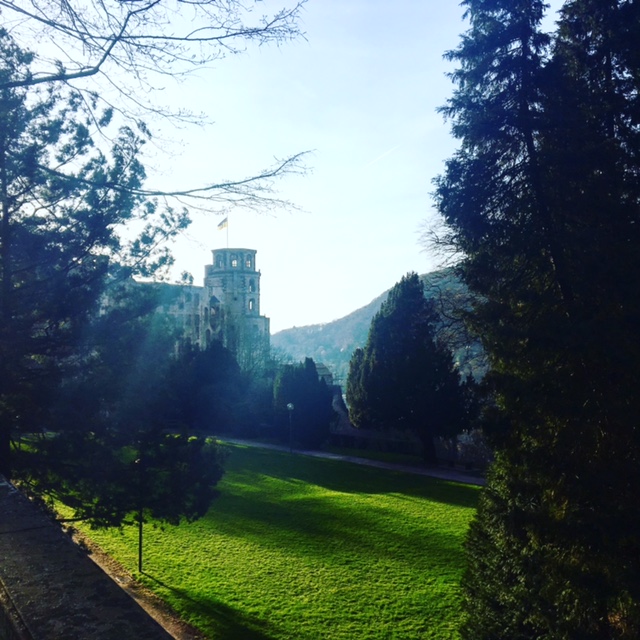
The location of Heidelberg Castle, makes it hard to imagine a more picturesque setting – positioned atop the Königstuhl Hill, it sits majestically overlooking the Neckar valley and the Old Town. You can see the castle from miles away.
The castle is a mix of styles from Gothic to Renaissance. Prince Elector Ruprecht III (1398–1410) erected the first building in the inner courtyard as a royal residence. In the 16th and 17th centuries, the Prince Electors added two palace buildings and turned the fortress into a castle.
The castle and its garden were destroyed several times during the Thirty Years’ War and the Palatine War of Succession. As Prince Elector Karl Theodor tried to restore the castle, lightning struck in 1764, and ended all attempts at rebuilding. Later on, the castle was misused as a quarry; stones from the castle were taken to build new houses in Heidelberg. This was stopped in 1800 by Count Charles de Graimberg, who then began the process of preserving the castle.
Although the interior is in Gothic style, the King’s Hall was not built until 1934. Today, the hall is used for festivities, e.g. dinner banquets, balls and theatre performances. During the Heidelberg Castle Festival in the summer, the courtyard is the site of open air musicals, operas, theatre performances, and classical concerts performed by the Heidelberg Philharmonics.
The castle is surrounded by a park, where the famous poet Johann von Goethe once walked. The Heidelberger Bergbahn – a funicular railway – runs from Kornmakt to the summit of the Königstuhl via the castle so you can enjoy the view without having to walk to the top!
The Heidelberg Tun (German: Großes Fass), or Great Heidelberg Tun, is an extremely large wine vat contained within the cellars of Heidelberg Castle. One hundred and thirty oak trees were reputedly used in its construction. It has only rarely been used as a wine barrel, and in fact presently enjoys more use as a tourist attraction, and also as a dance floor since one was constructed on top of the tun!
Driving to Heidelberg from Ramstein Air Base takes about 1.5 hours. However on our trip we took the train and at €10.50 each way from Ramstein, Landstuhl and KTown, which is a much more relaxing experience. Not to mention scenic!
Keep on exploring!
Cheers, John